Chartered vs certified vs unqualified: accountant titles explained
One thing tends to surprise people the first time they hear it: in the UK, the word "accountant" is not a protected or regulated title. Unlike "solicitor" or "doctor", there is no law stopping anyone from calling themselves an accountant, regardless of their qualifications, training or experience. That does not mean the profession is a free-for-all — several well-established professional bodies set genuinely rigorous qualification standards, and specific activities like statutory audit are tightly regulated — but it does mean the single word "accountant" on a website or business card tells you almost nothing on its own about who you are actually dealing with.
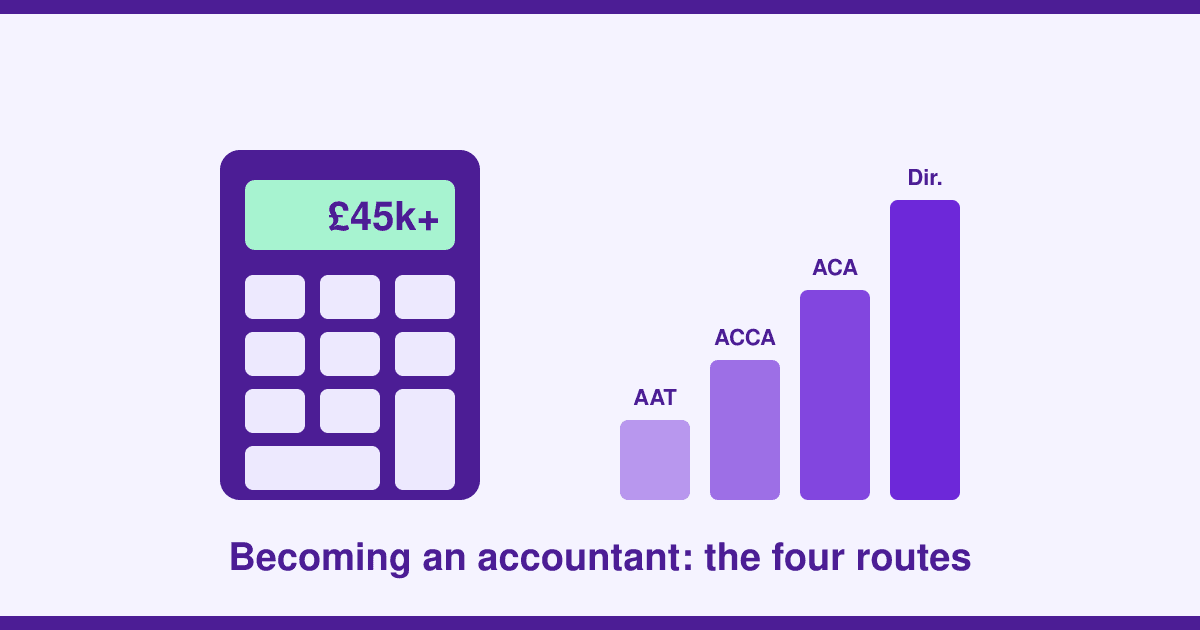
The main chartered accountancy bodies operating in the UK are the Institute of Chartered Accountants in England and Wales (ICAEW), the Association of Chartered Certified Accountants (ACCA), and the Chartered Institute of Management Accountants (CIMA), alongside smaller or more specialised bodies such as the Institute of Chartered Accountants of Scotland (ICAS) and the Chartered Institute of Public Finance and Accountancy (CIPFA), which focuses on the public sector. Members who qualify through ICAEW use the letters ACA and can describe themselves as chartered accountants; ACCA members use the letters ACCA and the designation "chartered certified accountant"; CIMA members use the letters ACMA or FCMA and, since a partnership with the American Institute of CPAs, often also hold the CGMA designation, with a training focus weighted more toward management accounting, business strategy and internal finance than toward audit and tax compliance work specifically. All three routes require passing a substantial series of professional exams, completing a set period of supervised, relevant work experience, and — once qualified — maintaining ongoing continuing professional development each year, along with adherence to a formal code of ethics enforced by the awarding body, including a disciplinary process for members who fall short.
The Association of Accounting Technicians, usually shortened to AAT, sits alongside these chartered bodies rather than competing directly with them, and it is worth understanding as a genuinely separate route rather than a lesser version of the same thing. AAT is a membership body, with well over 100,000 members, built around technician-level qualifications in bookkeeping and accounting rather than the full chartered accountancy syllabus. It is a common and sensible starting point for people newer to the profession, and many AAT-qualified bookkeepers and accountants run entirely competent, well-regarded practices handling day-to-day bookkeeping, VAT returns and straightforward Self Assessment work — this is a difference in scope and depth of training, not a straightforward hierarchy where AAT is simply "less qualified" in every situation. For more complex company accounts, audit work, or intricate tax planning, a chartered accountant's deeper training is generally more relevant.
Because "accountant" itself is not protected, it is entirely possible to find someone offering accountancy or tax services with no formal qualification from any of these bodies at all. This is not automatically a red flag — some experienced, capable practitioners have built a career without a chartered qualification — but it does shift more of the burden of checking onto you as the client. One useful, and often overlooked, safeguard applies regardless of qualification level: anyone in the UK offering accountancy, bookkeeping or tax services to the public is legally required to be supervised for anti-money laundering purposes, either through membership of a recognised professional body that provides this supervision or, failing that, directly through HMRC. Asking who supervises a prospective accountant for anti-money laundering purposes is a reasonable, specific question that any legitimate practitioner should be able to answer without hesitation.
In practice, the most reliable way to check someone's actual status is to ask directly which professional body they belong to, and then verify that membership independently rather than taking a website badge at face value — ICAEW, ACCA and CIMA all offer public "find a member" or "find a firm" search tools on their own websites, and a genuine member's registration number should match what they tell you. It is also worth asking what qualification level a specific person handling your affairs actually holds, since larger firms sometimes have a mix of chartered accountants, AAT-qualified staff and trainees working on different parts of an engagement, which is entirely normal but worth understanding upfront, particularly for more complex or higher-value work.
None of this is a recommendation of one qualification route over another, or of any specific firm — the right fit depends on the complexity of what you need done, and a well-matched AAT-qualified bookkeeper can be entirely appropriate for straightforward needs where a chartered accountant would be unnecessary overkill, and vice versa for complex company or tax work. This article is general information, not tax or accounting advice. Our directory lists UK accountants and bookkeepers by area, and checking a firm's professional body membership and anti-money laundering supervision directly remains the most reliable step before you commit to working with anyone.
Frequently asked questions
No. Unlike "solicitor", the word "accountant" is not protected by law in the UK, and anyone can use it regardless of qualifications. "Chartered accountant" and "chartered certified accountant" are protected in practice through membership of bodies such as ICAEW and ACCA, but "accountant" alone is not.
ICAEW awards the ACA qualification and is widely used across audit and general practice; ACCA awards the ACCA qualification and the "chartered certified accountant" title and is also common in general practice; CIMA focuses more on management accounting and business strategy. All three require professional exams, supervised experience and ongoing CPD.
AAT is a technician-level qualification focused on bookkeeping and accounting fundamentals rather than the full chartered syllabus, so it is better understood as a different scope of training rather than simply "lower". Many AAT-qualified practitioners handle bookkeeping, VAT and straightforward Self Assessment work competently; more complex company accounts or tax planning generally call for chartered-level training.
ICAEW, ACCA and CIMA each offer a public search tool on their own website where you can look up a member or firm by name or membership number. It is also reasonable to ask directly which body supervises them for anti-money laundering purposes, since this is a legal requirement for anyone offering accountancy services.