How to Become an Accountant in the UK: AAT, ACCA, ACA and CIMA Compared — With 2026 Salaries at Every Rung
Accountancy is one of the few UK careers with a genuinely open door: no mandatory degree, multiple professional bodies, and employers who fund the exams. The confusing part is the alphabet — AAT, ACCA, ACA, CIMA — because the letters aren't interchangeable: they lead to different work, different employers and measurably different pay. Here's the honest map for 2026.
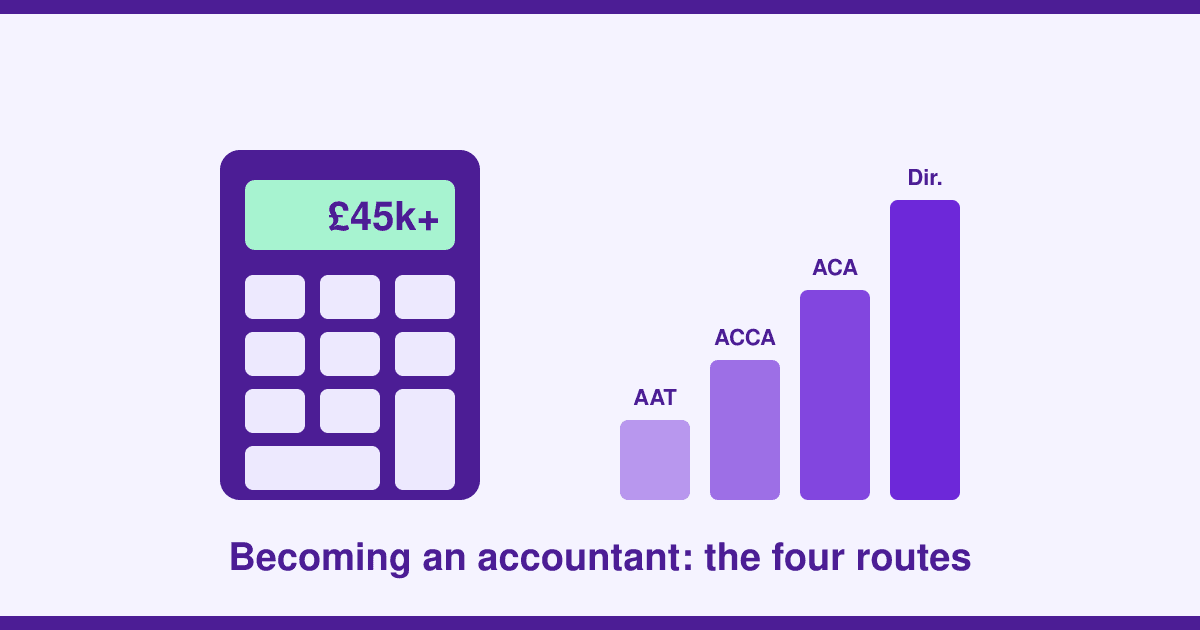
In short: AAT (2–3 years) is the accessible entry that gets you earning fast; ACCA (3–5 years) and ACA (3–5 years, 14 exams plus 450+ days of assessed experience) are the chartered heavyweights — qualification adds an immediate £10,000–£20,000 to base salary; CIMA is the management-accounting specialist for careers inside businesses. Newly qualified chartered accountants earn £45,000–£65,000, with Big 4 London at £52,000–£58,000.
The four routes, honestly compared
| Route | Time | Leads to | Newly qualified pay |
|---|---|---|---|
| AAT (Accounting Technician) | 2 – 3 years | Practice and industry roles, MAAT status | £28,000 – £40,000 |
| ACCA (Chartered Certified) | 3 – 5 years | Practice, industry, audit — globally portable | £45,000 – £65,000 |
| ACA (ICAEW Chartered) | 3 – 5 years; 14 exams + 450+ days experience | The Big 4/practice gold standard | £45,000 – £65,000 (Big 4 London £52,000 – £58,000) |
| CIMA (Management Accountant) | 3 – 4 years | Finance roles inside businesses — FP&A, commercial finance | 30 – 50% above newly-MAAT pay |
Trainees across all routes start at £22,000–£28,000 — the meaningful divergence happens at qualification, when chartered status adds £10,000–£20,000 overnight and opens the manager ladder: £75,000–£90,000 at Big 4 manager level, £90,000–£140,000 senior manager to director.
The underrated play: AAT first
The route guides rarely lead with this, but the pragmatic path for most non-graduates (and plenty of graduates) is AAT first: earning MAAT money within two years, then converting — AAT completion grants nine paper exemptions toward ACCA, turning the chartered climb into a shorter, employer-funded second leg. It de-risks the decision too: two years in, you know whether practice, industry or running your own client base is the goal before committing to the full chartered grind.
Choosing between the chartered letters
- ACA (ICAEW): the practice and audit gold standard — the traditional Big 4 training contract route, with its structured 450-day experience requirement. Choose it if audit and practice partnership appeal.
- ACCA: the flexible chartered route — self-paced exams, global recognition, no mandatory training contract, equally at home in practice and industry.
- CIMA: the business-side specialist — budgeting, forecasting, commercial decisions inside companies rather than auditing them. If "finance business partner" sounds better than "audit senior," this is your letterhead.
The nuance clients meet later: all three produce "accountants," but what each is licensed and experienced to do differs — the same distinction our guide to chartered vs certified vs unqualified accountants unpacks from the customer's side.
Getting the first foot in
- School leavers: AAT apprenticeships and Big 4 school-leaver programmes (straight onto ACA) — no degree, no student debt, salary from day one.
- Graduates (any subject): training contracts at practices large and small — maths degrees are not required; firms train from scratch.
- Career changers: AAT part-time alongside work is the standard on-ramp; bookkeeping and finance-admin roles convert to trainee positions readily.
- The exam reality: every route demands sustained evening-and-weekend study for years — the pass isn't intellect, it's consistency. Employer-funded study packages (courses, exam fees, study leave) are standard; negotiate them like salary.
For business owners reading this: the qualification ladder is precisely why fees differ between the bookkeeper, the AAT technician and the chartered firm — and why matching the qualification to the job matters. What accountants cost and when it's time to switch cover the hiring side — find vetted accountants near you here.
The bottom line
AAT to start earning inside two years, ACCA or ACA for the chartered jump worth £10,000–£20,000, CIMA for the business-side track — with the AAT-first-then-convert route as the quietly optimal path for most. Pick the letters to match the destination, then let an employer fund the climb.
Frequently asked questions
No. AAT has open entry, school-leaver programmes at major firms lead straight onto the ACA, and ACCA requires no degree — any-subject graduates and non-graduates alike train through the same professional exams. Employers typically fund courses, exam fees and study leave.
ACA (ICAEW) is the traditional practice and audit gold standard with a structured training contract; ACCA is the flexible, globally portable chartered route across practice and industry; CIMA specialises in management accounting — finance roles inside businesses. All reach chartered-level pay; they lead to different work.
Trainees earn £22,000–£28,000; newly qualified MAAT (AAT) £28,000–£40,000; newly qualified chartered (ACCA/ACA) £45,000–£65,000, with Big 4 London at £52,000–£58,000. Manager level runs £75,000–£90,000 and senior manager to director £90,000–£140,000 — qualification itself adds £10,000–£20,000 to base pay.
For most people, yes: AAT gets you earning MAAT-level pay within two years, grants nine paper exemptions toward ACCA, and lets you test whether practice or industry suits before committing to the full chartered qualification — usually with an employer funding the second leg.